
We log anonymous usage statistics. Please read the privacy information for details.
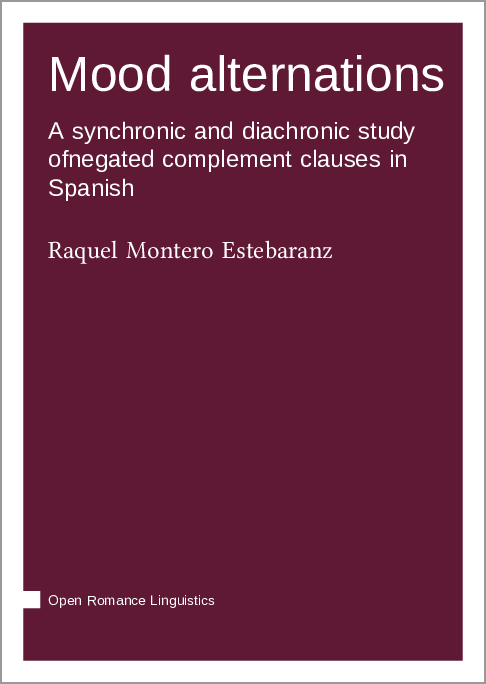
Mood alternations: A synchronic and diachronic study of negated complement clauses in Spanish
Synopsis
This book investigates Polarity Mood (PM) in Peninsular Spanish and how the phenomenon has evolved diachronically. In particular, it explores from a theoretical and empirical perspective the interaction of PM with five other linguistic phenomena: (i) the verb class of the matrix predicate, (ii) the presence of a first-person subject; (iii) the type of matrix clause, (iv) information structure, and (v) the presence of Negative Polarity Items. Drawing inspiration from the competing grammars framework, the book starts by proposing an account of mood morphology in terms of three competing systems: one in which mood morphology is used as a hedging device to express the degree of commitment; another in which mood is analyzed as a pronoun which indicates that the world of evaluation lies in some accessible Context Set; and another in which mood is used as a purely grammaticalized syntactic marker. The second part of the book shows how the historical competition between these systems explains the diachronic development observed in corpus data, as well as the present-day mood selection patterns.
Statistics
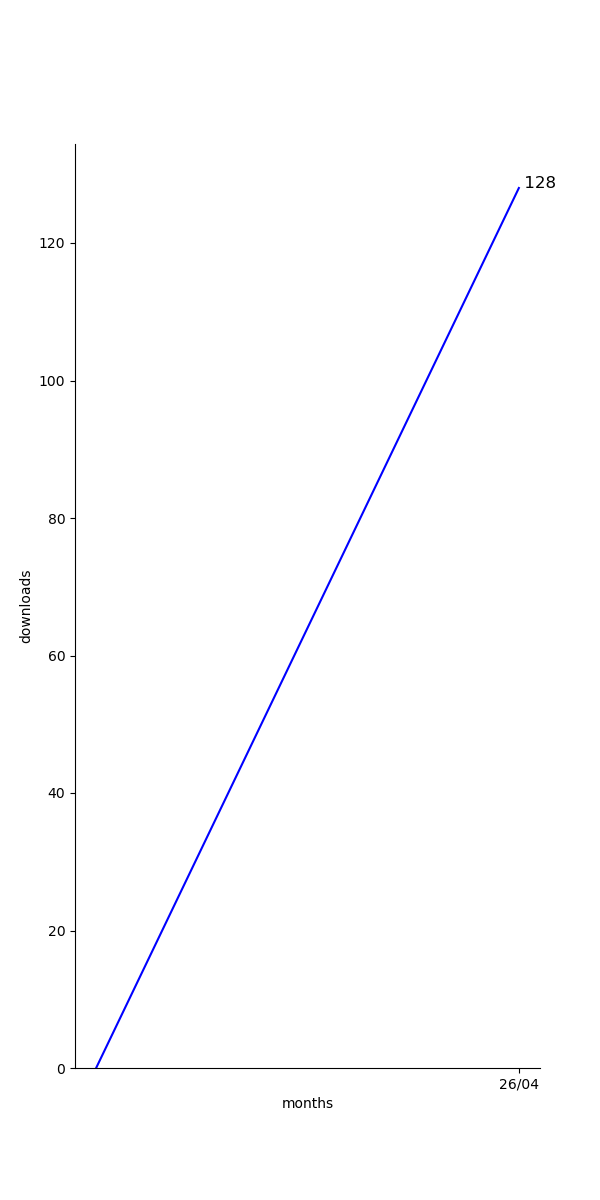
Downloads
Published
April 13, 2026
LaTeX source on
GitHub
Cite as
Montero Estebaranz, Raquel. 2026. Mood alternations: A synchronic and diachronic study of negated complement clauses in Spanish. (Open Romance Linguistics 8). Berlin: Language Science Press. DOI: 10.5281/zenodo.19069652
Copyright (c) 2026 Raquel Montero Estebaranz
Details about the available publication format: PDF
PDF
ISBN-13 (15)
978-3-96110-566-3
doi
10.5281/zenodo.19069652
Details about the available publication format: Hardcover
Hardcover
ISBN-13 (15)
978-3-98554-186-7
Physical Dimensions
180mm x 245mm