

We log anonymous usage statistics. Please read the privacy information for details.
Language Landscapes: The ESL teacher's guide to how English works
Keywords:
TESL, TESOL, EAP, pedagogical grammar, grammaticality (usage-based), category–function distinction, constructional patterns, information structure, cohesion and coherence, fluency (instructional trade-offs), connected speech, pronunciation, orthography and phonicsSynopsis
Language landscapes is a practical map of English for TESL educators, built around form–meaning pairings and the needs of real classrooms. Adopting a CGEL-informed framework, it stabilizes the category – function distinction (e.g., determinatives vs determiner function), pares back overloaded labels (especially in the adverb/preposition space), and introduces syntax trees as a teacher’s analytic lens rather than a student exercise. Early chapters address standards and normativity alongside a usable model of grammaticality; the book then moves through phonology (with Southern Ontario reference vowels and connected-speech processes), vocabulary (frequency, distribution, deliberate practice), orthography and phonics, and high-utility constructions (questions, negation, relatives). Later chapters treat information packaging, coherence and cohesion, pragmatics and conversation (including digital turn-taking), and fluency across skills, connecting analysis to instructional decisions and trade-offs with accuracy. Throughout, the book foregrounds counter-example reasoning, common TESL pitfalls, and modular sequencing so instructors can enter via fluency/discourse, sound/writing, or grammar proper. The approach is functionalist and usage-aware, emphasizing community conventions, processing pressures, and change over time; trees and constructional patterns are tools for understanding, not ends in themselves. With concise diagnostics (e.g., NICER properties of auxiliaries), worked examples, glossaries, and cross-references, Language landscapes helps teachers say more with fewer rules – and better justify what to teach, when, and why.
Statistics
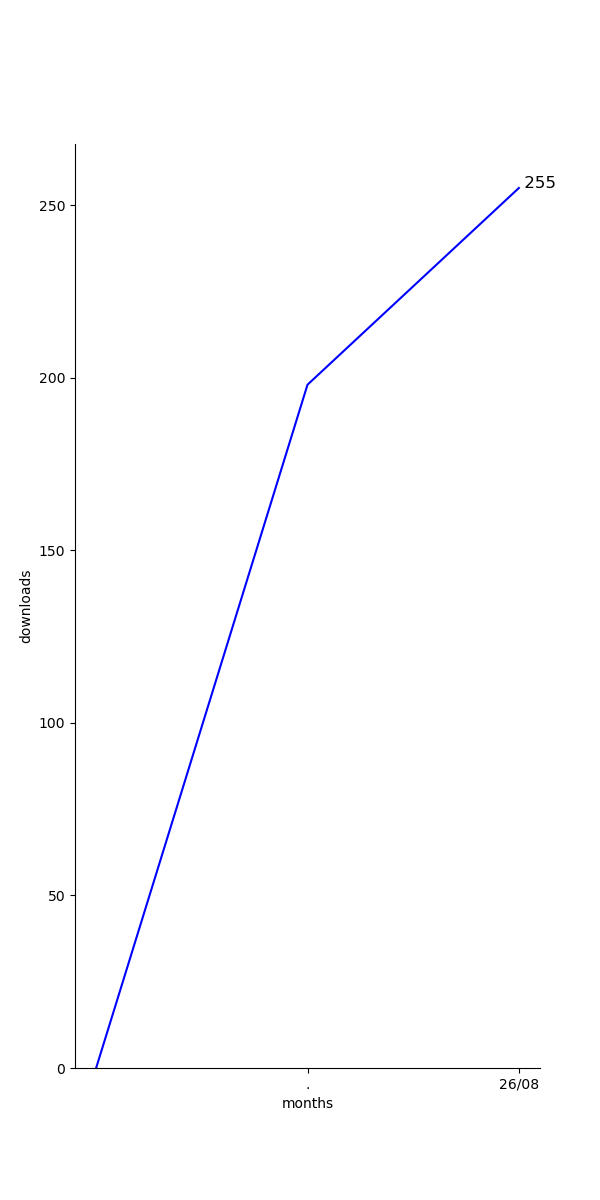
Downloads
Published
July 12, 2026
LaTeX source on
GitHub
Print ISSN
2364-6209
Cite as
Reynolds, Brett. 2026. Language Landscapes: The ESL teacher's guide to how English works. (Textbooks in Language Sciences 19). Berlin: Language Science Press. DOI: 10.5281/zenodo.20612113
Copyright (c) 2026 Brett Reynolds
Details about the available publication format: PDF
PDF
ISBN-13 (15)
978-3-96110-585-4
doi
10.5281/zenodo.20612113
Details about the available publication format: Softcover
Softcover
ISBN-13 (15)
978-3-98554-202-4
Physical Dimensions
180mm x 245mm